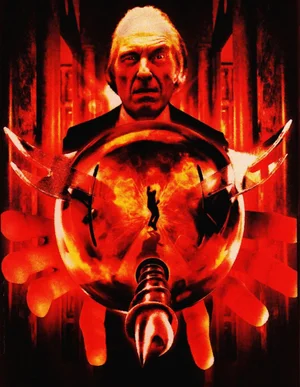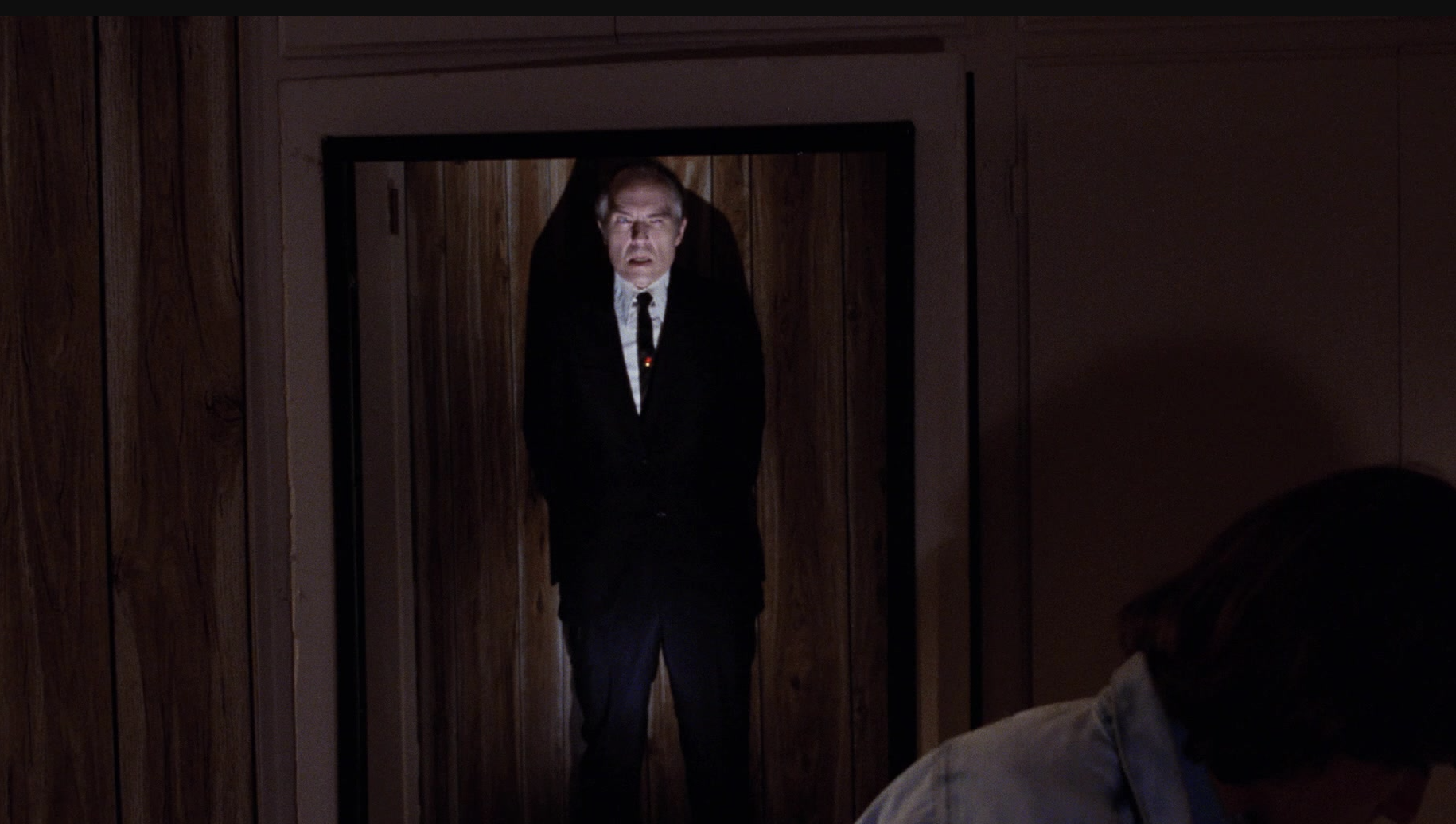
The iconic Angus Scrimm staring at young “Mike” with beautiful cinematography by Don Coscarelli
If you're reading this, chances are you've been thinking about the ending of Phantasm for a long time. Maybe you saw it at a drive-in in 1979. Maybe you caught it on a grainy VHS dub a friend passed along in the mid '80s. Maybe you discovered it through the stunning 4K restoration that J.J. Abrams' Bad Robot helped bring to life. However you found your way to Morningside, one thing is almost certainly true… the ending stayed with everyone.
Don Coscarelli's original Phantasm closes with one of the most debated finales in horror history, a double twist that reframes everything you just watched and then yanks the floor out a second time. Fans have argued about its meaning for over four decades. We've heard every theory at conventions, in comment sections, and in late night conversations after marathon screenings.
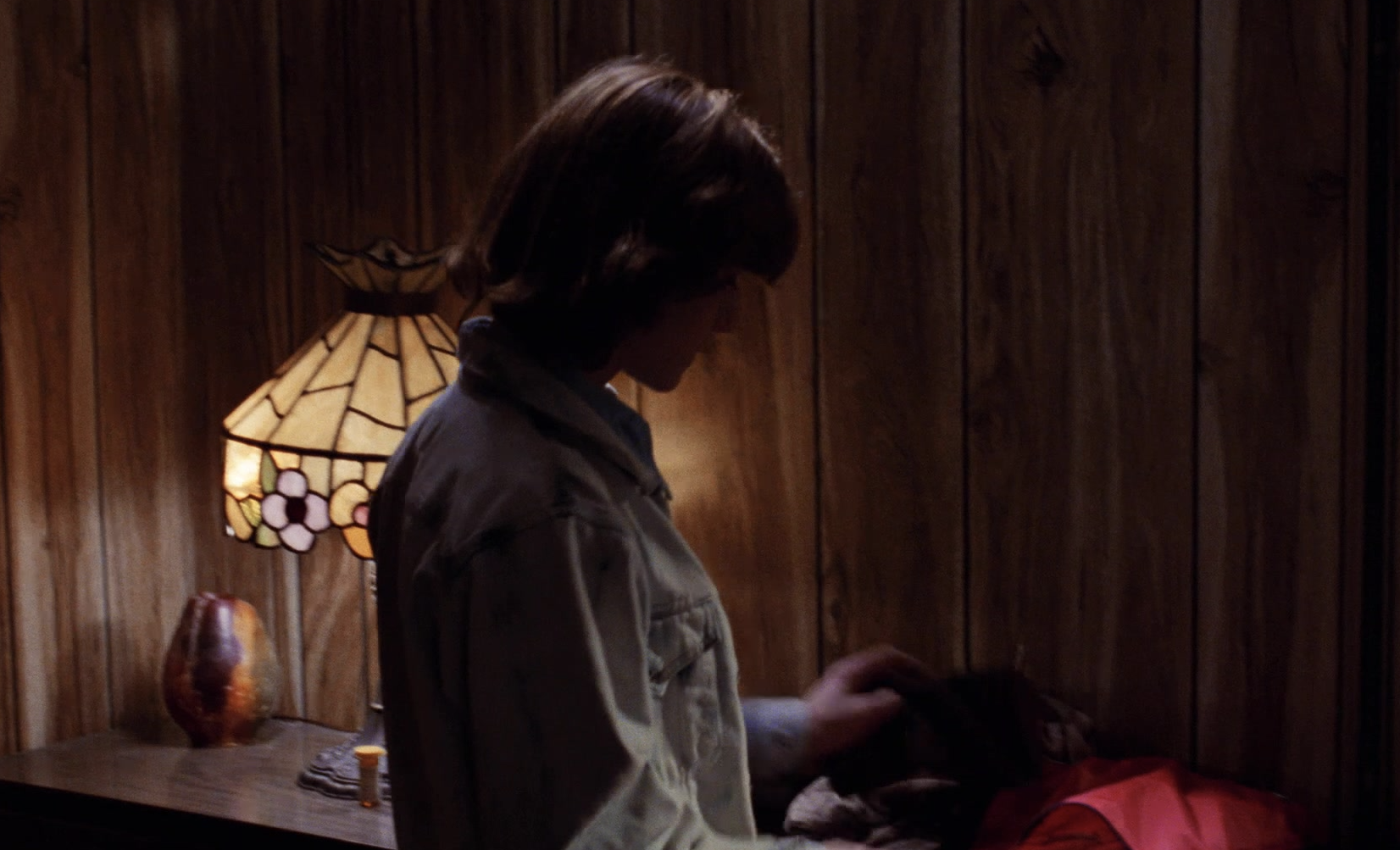
Mike from PHANTASM packing his bag for his road trip with Reggie before The Tall Man haunts him in the mirror…
The World Before the Ending: For anyone who needs a refresher (no judgment, Phantasm rewards rewatching more than almost any horror film ever made), the heart of the story is deceptively simple. Thirteen year old Mike Pearson has lost both of his parents. His older brother Jody, a twenty four year old musician with a '71 Barracuda and effortless cool, is raising him. Their buddy Reggie, ice cream vendor, guitar picker, and the most loyal friend you could ask for, rounds out the family unit.
But Mike is terrified. Not of monsters. Not yet. He's terrified that Jody is going to leave him. That his brother will move on, hand him off to an aunt, and disappear from his life the way their parents did. This is established before a single supernatural event occurs. It's the film's emotional foundation, and it's the key to understanding everything that comes after.
When their friend Tommy dies under mysterious circumstances, Mike follows Jody to the funeral at Morningside Cemetery. Hiding in the bushes, he witnesses something impossible: the towering mortician, our Tall Man, brought to unforgettable life by the late, great Angus Scrimm, lifting a loaded coffin single handedly into the back of a hearse.
From there, Mike plunges headlong into the nightmare. The hooded dwarf creatures. The silver Sentinel sphere, drilling through a man's skull in a spray of blood. A dimensional gateway behind a door in the mortuary leading to a scorched, red alien world. The Tall Man's scheme: harvesting the dead, crushing their bodies down to dwarf size, reanimating them as slave labor for another dimension.
Mike drags Jody and Reggie into the fight. They battle the Tall Man. They bury him in a collapsed mine shaft. They win.
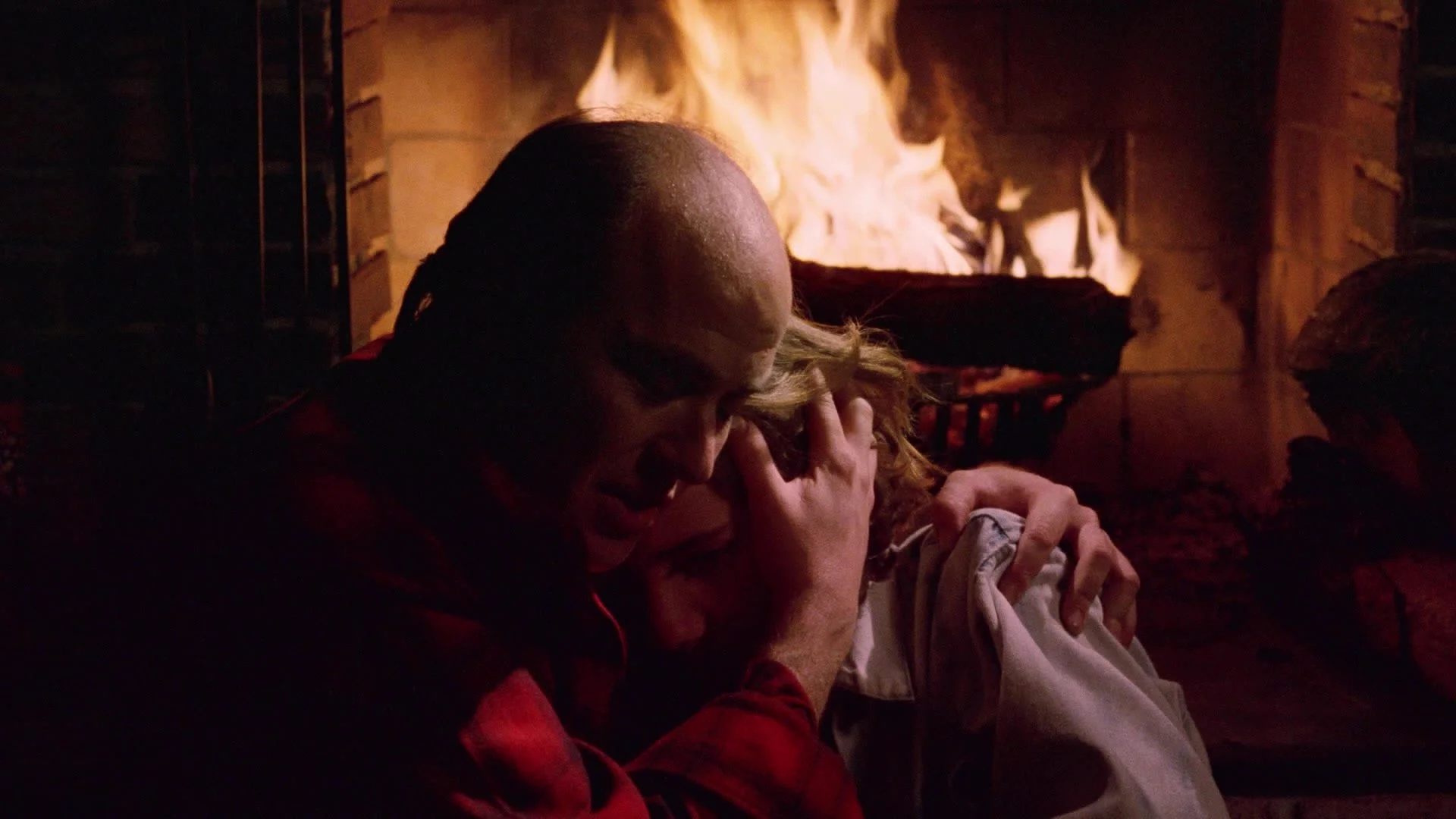
Reggie swore to protect Mike at the end of the original PHANTASM…
After the Tall Man is entombed, after Reggie has fallen during the struggle, Mike wakes up. He's on a couch. Reggie is sitting nearby, alive, calm, concerned. He gently tells Mike the truth: Jody is dead. He didn't die fighting the Tall Man. He died in a car accident. There was no Tall Man. There were no spheres, no dwarves, no interdimensional portal. It was all a dream. Mike is in Reggie's care now.
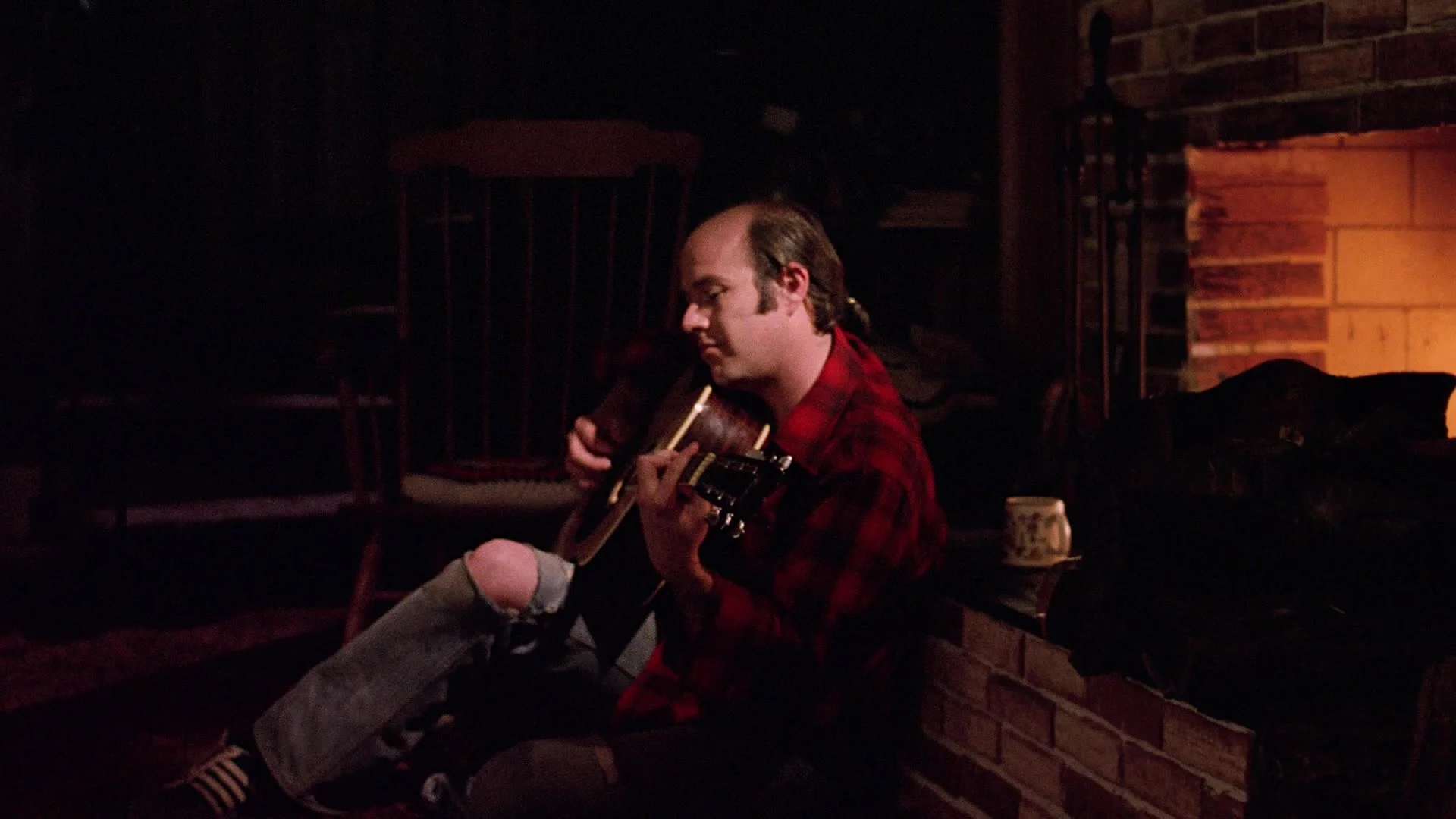
Reggie “Just Sittin’ Here At Midnight” as he contemplates taking on the father figure role of Mike at the end of the original PHANTASM…
It's a devastating reveal, played with quiet warmth by Reggie Bannister. For a moment, the film settles into something resembling peace. Reggie tells Mike to go pack his things. They're heading out of town for a while: A fresh start.
Mike walks to his bedroom. He starts packing. And from behind him, two hands explode through his bedroom mirror. The Tall Man. The dwarves seize Mike and drag him backward through the shattered glass. The screen cuts to black. That voice, Angus Scrimm's unmistakable growl, fills the darkness:
"Booooooy!"
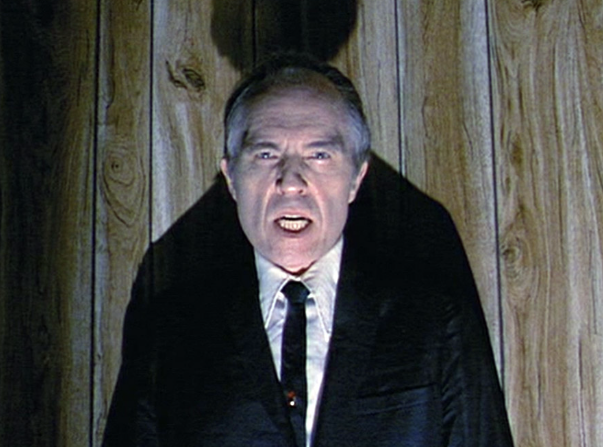
Angus Scrimm’s shadow and snarl haunted nightmares of millions in the 1970s…
Over the decades, three major interpretations have emerged among Phans. Each one works. Each one hurts in a different way…
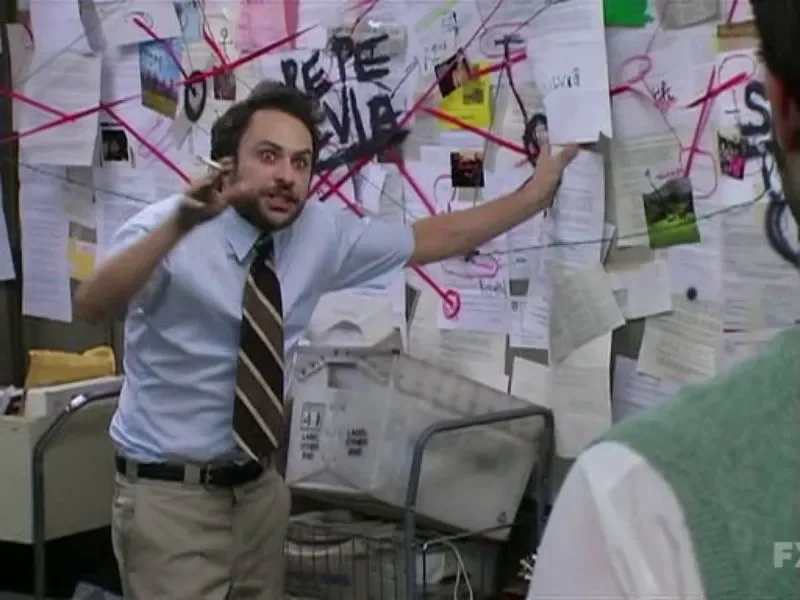
Visual representation of a PHANTASM phan trying to intrepet the series…
The Grief Reading
This is the interpretation that film scholars have gravitated toward most, and it's the one closest to what Don and Angus themselves discussed publicly over the years.
In this reading, the entire adventure, the Tall Man, the spheres, all of it, is a fantasy Mike has constructed to cope with unbearable loss. He's lost his parents. He's lost his brother. The real world offers no villain to fight, no explanation for why people die. A car accident is random. It's meaningless. But if death takes the form of a sinister mortician with a plan, it becomes something you can confront. Something you can try to beat.
Film scholar John Kenneth Muir wrote that the Tall Man embodies childhood fears of adults and that the Tall Man wins in the end because dreams are the only place where death can be defeated. Angus himself noted that the story is driven by how a young person fantasizes about death to process the loss of his family. Don has spoken about being drawn to the strangeness of American funeral culture, the mortician in dark clothing, the secretive procedures, the elaborate productions of grief, and channeling that into horror.
The moment where Mike visits the fortune teller and is told to place his hand in a black box (a loving nod to Frank Herbert's Dune) doubles as the film's thesis statement. The fortune teller's granddaughter tells him not to be afraid, and when his fear subsides, the box releases him. Fear itself is the real enemy. The Tall Man is just the mask it wears.
Under this lens, the ending is gutting. The "waking up" scene is reality. Jody is gone. Reggie is stepping in as a surrogate father. And the final scare, the Tall Man smashing through the mirror, tells us Mike cannot accept this reality. He's being pulled back into the nightmare because the truth is worse than any monster. The grief swallows him whole.
The Supernatural Reading
The more literal interpretation, and one that the sequels arguably support, takes the Tall Man at face value. He's real. The interdimensional threat is real. The spheres are real. And the cozy scene with Reggie? That's the illusion.
We know from the film itself that the Tall Man can shapeshift. He is the Lady in Lavender who seduces and kills Tommy in the opening scene. If he can assume another form to lure a victim, he can certainly fabricate a false sense of safety to lower Mike's guard. The waking scene with Reggie could be the Tall Man's final manipulation, a momentary reprieve designed to make the capture all the more devastating.
Longtime Phans have debated this angle for years. As one fan put it in an early online discussion, the Tall Man can mess with people's minds, and the ending with Reggie as Mike's guardian is just another one of his tricks. The Tall Man snatching Mike at the end is the real reality.
This reading positions Phantasm as a pure supernatural horror film where the villain is simply more powerful than anyone imagined, capable not just of raising the dead, but of rewriting a boy's perception of reality itself.
The Deliberate Mystery
The third interpretation is that the ambiguity is the point, and that choosing definitively between dream and reality misses what makes Phantasm special.
Don has been open about the fact that during production, the team didn't have a clear idea of how the story would end. Several endings were filmed. One unused ending was later incorporated into Phantasm IV: OblIVion. The film's fractured, dreamlike quality emerged in large part from an extensive editing process during months of post production. Don has said he's proud that so much of Phantasm is open to interpretation, contrasting it with the experience of making Phantasm II for Universal, where studio executives issued a directive that the audience needed to understand what was happening at all times. That mandate stripped the sequel of the surreal texture that made the original so distinctive.
The very title of the film tells you what you're in for. A phantasm. A delusion, a phantom, an apparition. This is a movie where reality, fantasy, and grief occupy the same space, where nightmare logic isn't a flaw but a feature. Don has always liked leaving questions unanswered at the end of a Phantasm film, and that instinct is what keeps us coming back.
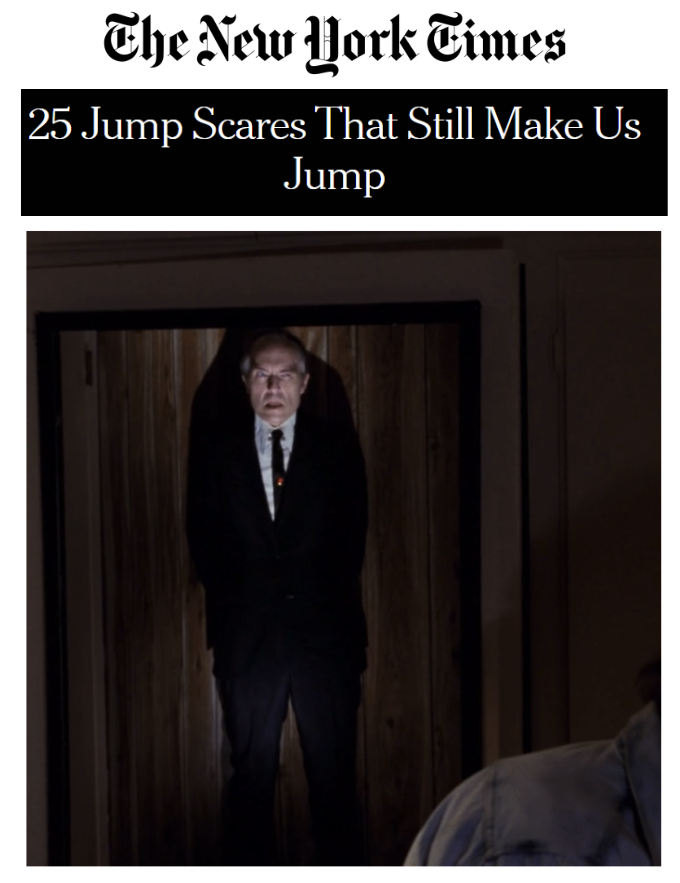
The NY Times recently named the ending of PHANTASM one of the best jump scares of all time!
The Tall Man isn't done scaring people. Phantasm's iconic mirror scene was recently named one of the Top 25 Jump Scares of all time by The New York Times, placing it alongside genre defining moments from Psycho, Jaws, Alien, Carrie, and modern classics like Hereditary and A Quiet Place. It's the kind of recognition that proves what Phans have known since 1979: that one chilling moment of Angus Scrimm appearing behind Mike, minimal in execution but maximum in impact, belongs in the conversation with the greatest scares ever put on film.
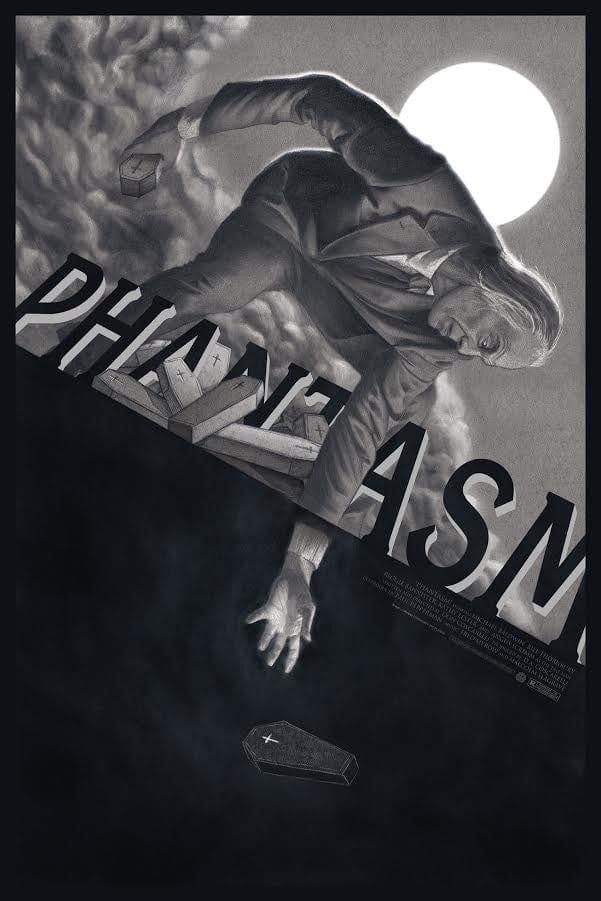
Phantasm Phans are the absolute best film fans on the planet with their incredibly detailed theories and more..
Here's what we know for certain: Don Coscarelli made a film about a boy who is terrified of losing his brother, and the film ends with that boy being taken. Whether the thing that takes him is a supernatural entity from another dimension or the crushing weight of his own grief is, beautifully, left for each of us to decide. The Tall Man doesn't explain himself. He never has. He just extends those long fingers, fixes you with that arched brow, and reminds you that the game is finished.
And if you listen closely, late at night, when the house is quiet and the mirrors catch the light just so, you might still hear it.
"Booooooy!"
Have your own theory about the ending? We've been debating this one since 1979 and we're not stopping now. Share your take with us on social media and tag @PhantasmMovies.