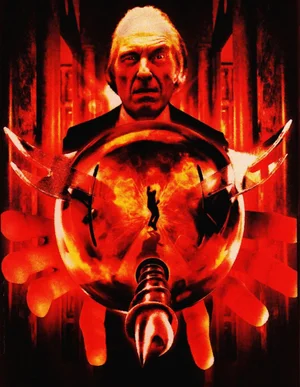
The Phantasm Poster That Helped Inspire Guillermo del Toro's Pans Labyrinth
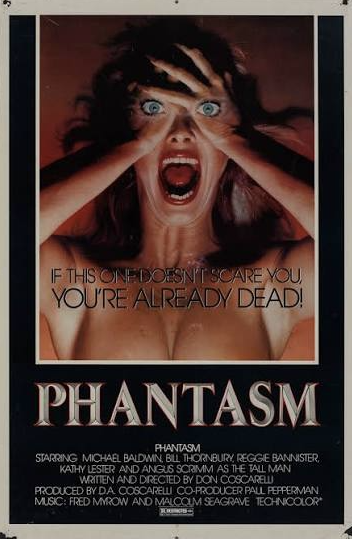
This rare international PHANTASM poster inspired Pan’s Labyrinth!
File this under things every phan should know: one of the most unique movie monsters of the 21st century owes a debt to a Phantasm poster.
During a Reddit AMA on r/movies recently, Guillermo del Toro was asked what gets lost when a computer generates an image instead of a human hand. His answer turned into a defense of the slow, strange, nonlinear way real creativity works, and the example he reached for was the Pale Man, the eyeless, child devouring horror at the heart of Pan's Labyrinth. It also got the MOST upvotes in the entire AMA!
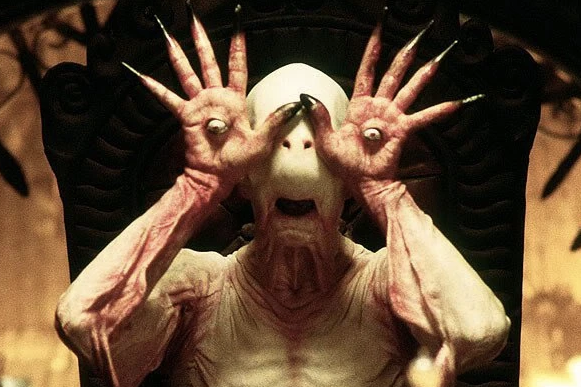
PHANTASM was the inspiration for Pale Man from Pan’s Labyrinth
As del Toro tells it, the creature was originally sculpted as an old man with a normal face. Then two images collided in his imagination at two different points over the span of weeks: a photo of a manta ray, and an obscure European alternate poster for Don Coscarelli's Phantasm.
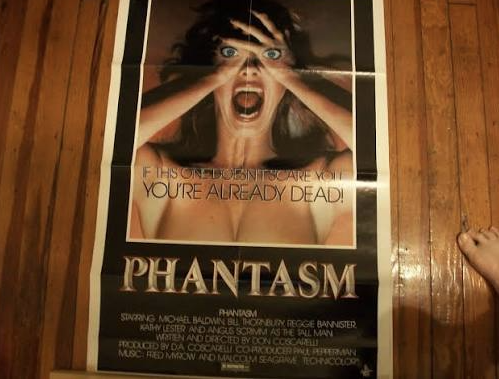
This European PHANTASM poster has become a hot collectible …
That combination pushed him to remove the face entirely, and eventually to put the eyes in the creature's hands.
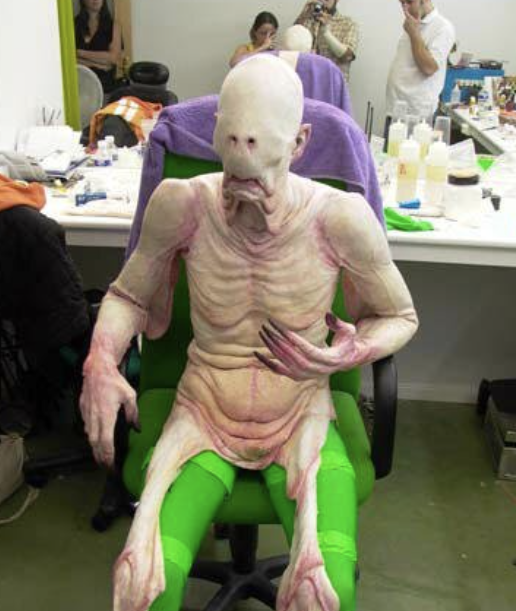
A fun behind the scenes shot of Pale Man, which GDT credits an obscure PHANTASM poster for inspiring…
He called that kind of collision "alchemy," the sort of unplanned triangulation that only happens when an artist lives with an idea for months.
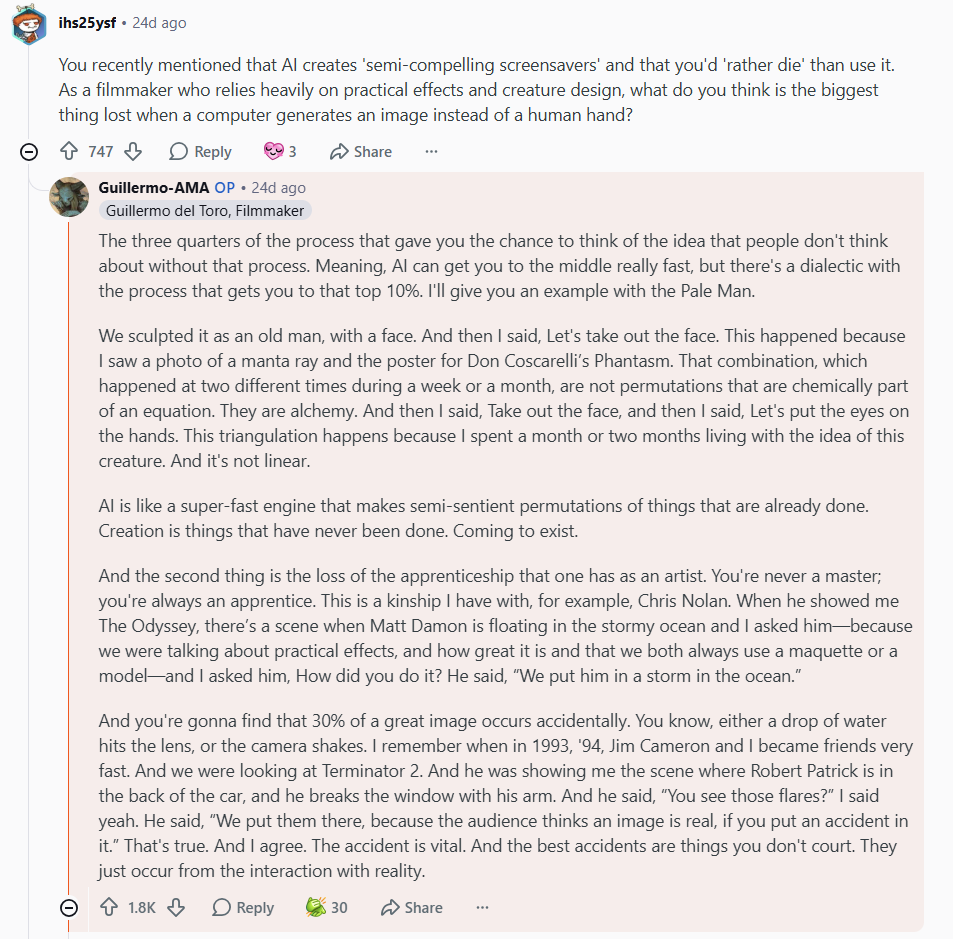
Guillermo Del Toro gives props to PHANTASM for inspiring Pan’s Labyrinth…
Del Toro has long worn his love of genre cinema on his sleeve, and hearing him cite Coscarelli's imagery in the same breath as his own masterpiece is a reminder of how far Morningside's shadow reaches.
While the poster has become an extremely rare collectable it was also released officially on Rock Is Dead Record’s 2001 re-release of the original PHANTASM soundtrack on CD:
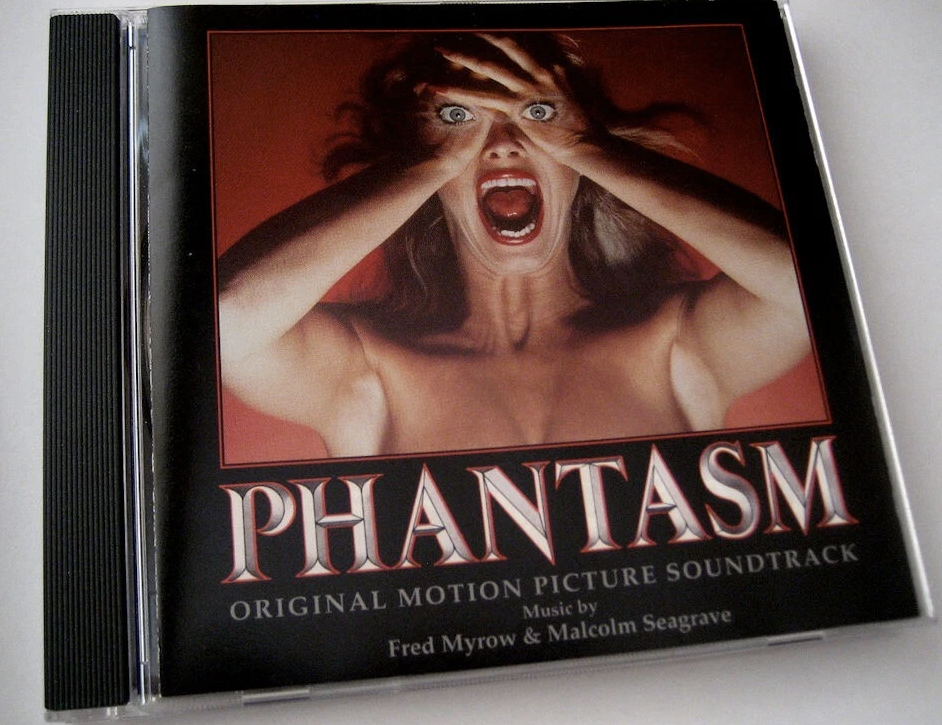
The last official time the PHANTASM franchise used this artwork was back in 2001 for a very limited soundtrack CD re-release..
There's a fitting postscript to all of this. Doug Jones, the actor who performed the Pale Man beneath all that makeup, later worked with Coscarelli himself, playing the enigmatic Roger North in 2012's John Dies at the End! Full circle.
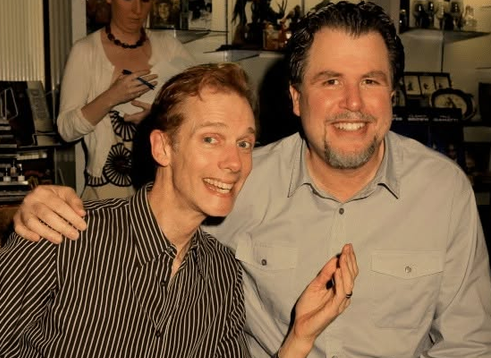
PHANTASM creator Don Coscarelli with Doug Jones who appeared in his 2012 film JOHN DIES AT THE END…
The full text of the exchange on Reddit is below:
You recently mentioned that AI creates 'semi-compelling screensavers' and that you'd 'rather die' than use it. As a filmmaker who relies heavily on practical effects and creature design, what do you think is the biggest thing lost when a computer generates an image instead of a human hand?
Guillermo del Toro, Filmmaker: “The three quarters of the process that gave you the chance to think of the idea that people don't think about without that process. Meaning, AI can get you to the middle really fast, but there's a dialectic with the process that gets you to that top 10%. I'll give you an example with the Pale Man.
We sculpted it as an old man, with a face. And then I said, Let's take out the face. This happened because I saw a photo of a manta ray and the poster for Don Coscarelli’s Phantasm. That combination, which happened at two different times during a week or a month, are not permutations that are chemically part of an equation. They are alchemy. And then I said, Take out the face, and then I said, Let's put the eyes on the hands. This triangulation happens because I spent a month or two months living with the idea of this creature. And it's not linear.
AI is like a super-fast engine that makes semi-sentient permutations of things that are already done. Creation is things that have never been done. Coming to exist.
And the second thing is the loss of the apprenticeship that one has as an artist. You're never a master; you're always an apprentice. This is a kinship I have with, for example, Chris Nolan. When he showed me The Odyssey, there’s a scene when Matt Damon is floating in the stormy ocean and I asked him—because we were talking about practical effects, and how great it is and that we both always use a maquette or a model—and I asked him, How did you do it? He said, “We put him in a storm in the ocean.”
And you're gonna find that 30% of a great image occurs accidentally. You know, either a drop of water hits the lens, or the camera shakes. I remember when in 1993, '94, Jim Cameron and I became friends very fast. And we were looking at Terminator 2. And he was showing me the scene where Robert Patrick is in the back of the car, and he breaks the window with his arm. And he said, “You see those flares?” I said yeah. He said, “We put them there, because the audience thinks an image is real, if you put an accident in it.” That's true. And I agree. The accident is vital. And the best accidents are things you don't court. They just occur from the interaction with reality.”